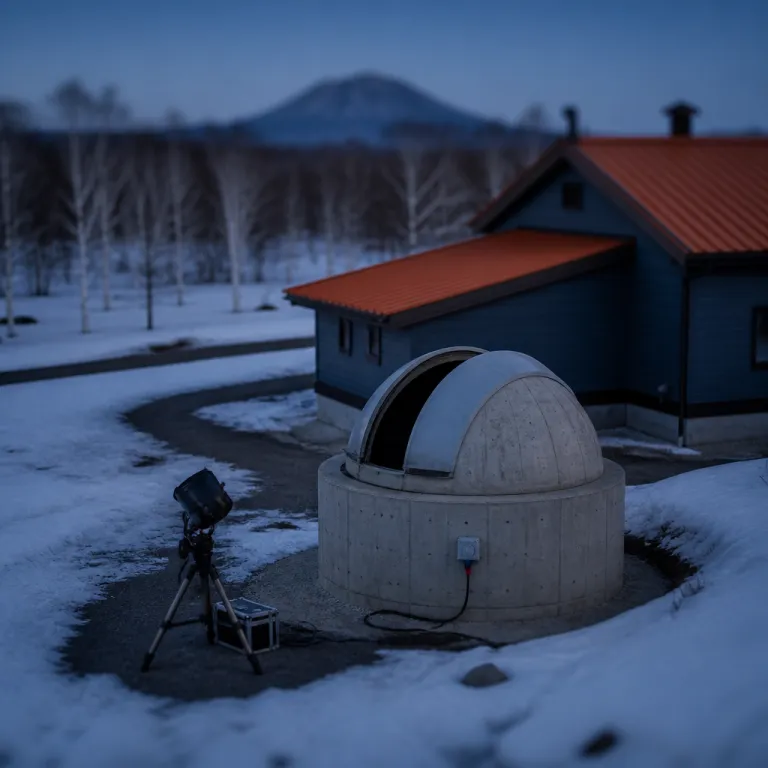
Why Hokkaido’s vast landscapes create rare dark sky conditions
Hokkaido sits at the northern edge of Japan, with a population spread thinly across a wide island. This geography keeps light pollution low, so the night sky often feels closer, deeper and more textured than in the country’s major cities. For couples planning hokkaido stargazing dark sky escapes, that combination of space and silence is the real luxury.
Inland plateaus and eastern Hokkaido plains cool quickly after sunset, which stabilises the air and sharpens the stars for much of the year. When the wind drops and the moon is slim, the starry sky over the island’s national park areas can look almost like an international dark sky reserve, even though no official designation exists yet. On the clearest night, you can trace the Milky Way with the naked eye while your local guide quietly adjusts a telescope beside you.
Hokkaido’s volcanic ranges also help, because mountains block the glow from distant towns and frame the sky like a natural observatory. Around Daisetsuzan National Park and the interior highlands, the night sky feels immense, and the dark horizon makes meteor showers easier to see for longer stretches of time. If you visit Hokkaido in the shoulder seasons, you will often find crisp air, fewer crowds and more time to enjoy stargazing without distraction.
Eastern Hokkaido, lake Mashu and Shiretoko: where the stars still rule the night
For serious hokkaido stargazing dark sky experiences, eastern Hokkaido is the region that seasoned astronomers mention first. The area around lake Mashu and the remote Shiretoko Peninsula has some of the lowest light pollution levels in Japan, thanks to small settlements and strict controls on development. On a cloudless night, the lake surface becomes a black mirror, doubling the stars and making the sky feel almost bottomless.
Lake Mashu sits inside Akan Mashu National Park, where rangers and a nature office sometimes coordinate guided walks that end at viewpoints timed for the night sky. Couples who book a private night tour with an English speaking local guide will usually be driven to higher lookouts, where the wind clears the air and the Milky Way arches above the caldera rim. In the best conditions, you can enjoy stargazing with the naked eye while a small astronomical observatory style telescope picks out clusters and the faint glow of distant solar activity.
Farther north, Hokkaido Shiretoko feels even more remote, with Shiretoko Nature cruises by day and deep darkness by night. Many travel itineraries pair a wildlife tour with an evening drive to unlit coastal laybys, where the moon rises over the Sea of Okhotsk and the starry sky stretches unbroken to Russia. If you plan your time around new moon periods in July August or early autumn, you will maximise your chances of a truly dark sky and perhaps catch late season meteor showers.
For context on how Hokkaido balances development and wilderness, luxury travelers can read about regional planning in pieces such as the analysis of a potential casino resort near Chitose Airport, which explores how high end travel growth might affect quiet corners of the island. Understanding these dynamics helps you choose where your own travel spending will support low impact, night friendly destinations. In eastern Hokkaido, that usually means small lodges, guided night tours and national park based stays rather than large resort complexes.
Dark sky friendly lodges and onsen retreats worth the journey
The most rewarding hokkaido stargazing dark sky trips start with choosing the right lodge, because architecture and lighting design matter as much as location. Around lake Mashu and eastern Hokkaido, several premium ryokan and small resorts now offer stargazing decks, rooftop terraces or private gardens that remain deliberately dark at night. When a property commits to low exterior lighting, the night sky becomes part of the room experience rather than an optional extra.
In Akan Mashu National Park, look for lakeside accommodations that face away from village lights and offer late check out, so you can stay up for meteor showers without sacrificing sleep. Some Japanese style inns provide yukata, down coats and hot drinks for a guided night tour, then lead guests to a quiet hill where the stars and moon reflect off the lake. In winter, snow amplifies the darkness by absorbing stray light, and the contrast between the white ground and black sky makes constellations appear almost three dimensional.
On the Shiretoko Peninsula, a few high end lodges work closely with Shiretoko Nature guides to run small group night tours that combine wildlife tracking and stargazing. You might follow fox tracks in the snow, then step into a clearing where the night sky opens above the forest and the only sound is the sea. Afterward, returning to a private onsen bath feels like a reward, and you will understand why Noboribetsu Onsen and other volcanic spa towns are often paired with dark sky trips in curated soaking guides for Hokkaido’s most atmospheric hot spring escapes.
Planning your stargazing season: when the Hokkaido sky performs best
Seasonal timing shapes every hokkaido stargazing dark sky itinerary, because cloud cover, humidity and daylight hours vary dramatically across the year. Winter brings the clearest air and the longest night, so couples who can handle sub zero temperatures will be rewarded with razor sharp stars and frequent meteor showers. The trade off is that roads in eastern Hokkaido can be icy, so you should allow extra travel time between national park areas and remote lodges.
Spring and autumn offer a gentler balance, with cool evenings, relatively low light pollution and more flexible driving conditions. In October, the night sky above Daisetsuzan National Park glows above red and gold slopes, and you can enjoy stargazing after an early dinner without staying up until midnight. Summer, especially July August, brings milder temperatures and the chance to pair a night tour with firefly watching or late twilight walks, though humidity can soften the stars on some nights.
Wherever you visit Hokkaido, aim for dates around the new moon, because a bright moon will wash out the faintest stars even in a dark sky region. Check local astronomical observatory forecasts for cloud cover and solar activity, which can influence auroral displays at Hokkaido’s latitude. If your schedule is fixed, build in at least two or three nights in the same area, so a single cloudy night will not ruin your stargazing plans.
For couples who want to weave hot springs into their seasonal planning, a refined guide to luxury onsen escapes across the island can help you match specific spa towns to the best sky conditions. Some valleys excel in winter, when steam rises under a starry sky, while others feel more romantic in shoulder seasons. Aligning your chosen onsen with your preferred night sky season will turn a simple stay into a layered, memorable experience.
Designing a romantic dark sky itinerary around lakes, onsens and quiet nights
A thoughtful hokkaido stargazing dark sky trip for two starts with deciding how you like to spend the day, because the best nights feel like a natural extension of your daylight rhythm. Many couples choose a pattern of gentle daytime travel, a late afternoon onsen and then an unhurried dinner before stepping out under the night sky. This slower pace keeps you warm, rested and ready to enjoy stargazing when the stars finally appear.
One classic route links lake Shikotsu, lake Toya and lake Mashu, creating a chain of water based viewpoints with different moods and levels of remoteness. At each lake, you will find Japanese inns and Western style resorts that dim their exterior lights, allowing the moon and stars to dominate the sky after about 21.00. Booking lake view rooms means you can watch the night sky shift from your balcony, then join a guided night tour if conditions look especially promising.
Another approach focuses on a single national park, such as Daisetsuzan or Akan Mashu, and spends several nights in one lodge to minimise packing and travel. This works well if you want to combine hiking, wildlife watching and onsen soaking with repeated chances to see meteor showers or rare solar phenomena. Ask your local guide or the lodge concierge to arrange a private night tour in English, and be clear that you prefer minimal artificial light so the naked eye view remains as close as possible to a true dark sky.
For couples curious about how other Japanese regions compare, it can be interesting to contrast Hokkaido’s quiet lakes and forests with more developed resort areas such as Park Okinawa or the ski slopes around Mount Tanigawa on Honshu. Those destinations offer their own charms, but the night sky often competes with city style lighting and busy nightlife. In Hokkaido, by contrast, the luxury is the silence, the darkness and the feeling that the stars belong almost entirely to you.
Practical tips for luxury travelers: guides, language and what to expect at night
Turning a hokkaido stargazing dark sky dream into a smooth reality means paying attention to details that many travelers overlook. First, decide whether you want a fully guided experience or prefer to explore the night sky independently with only a few pointers from a local guide. In remote parts of eastern Hokkaido, a guide who speaks both Japanese and English can be invaluable, especially when driving narrow roads at night or interpreting national park regulations.
When booking, ask your lodge or travel planner about their relationship with nearby nature offices, ranger stations or astronomical observatory facilities. Properties that work closely with these organisations will usually have better information on meteor showers, solar activity and seasonal wildlife that might affect night tours. They can also advise on whether a particular night tour will involve long walks, steep climbs or simply short strolls from a parked vehicle to a viewing point.
Pack as if you were going winter camping, even if you visit Hokkaido in July August, because standing still under a clear night sky can feel surprisingly cold. Layered clothing, hand warmers and insulated footwear will extend the time you can comfortably enjoy stargazing, whether you are watching the moon rise over lake Mashu or tracing constellations above Hokkaido Shiretoko. A small red light torch helps you move around without ruining your night vision, and a thermos of tea turns a simple pause into a small ritual.
Finally, manage your expectations with the same care you bring to any luxury trip, accepting that nature will always have the last word. Some nights, clouds will roll in and the dark sky will stay hidden, but the quiet, the fresh air and the feeling of being far from city light pollution still have value. Over several nights, patience usually pays off, and when the starry sky finally opens, every hour of waiting will feel like part of the story you came to Japan to live.
Key figures that shape Hokkaido’s stargazing potential
- Hokkaido’s population density is roughly 64 people per square kilometre, compared with more than 6 000 per square kilometre in central Tokyo, which directly reduces light pollution and preserves darker night skies (Statistics Bureau of Japan).
- Akan Mashu National Park covers about 91 000 hectares, giving planners room to maintain low impact lighting policies around lake Mashu and nearby viewpoints that are popular for stargazing (Ministry of the Environment, Japan).
- Shiretoko Peninsula, including Shiretoko National Park, is recognised as a UNESCO World Natural Heritage site, and its core zone has no permanent residents, which helps keep the night sky exceptionally dark over Hokkaido Shiretoko (UNESCO World Heritage Centre).
- Typical winter nighttime temperatures in eastern Hokkaido range from −10 °C to −20 °C, and this cold, dry air often produces some of the clearest night sky conditions in Japan for naked eye observations (Japan Meteorological Agency).
- Japan’s national grid reports that Hokkaido accounts for a small fraction of the country’s total electricity consumption, reflecting both its lower population and fewer large cities, which indirectly supports better dark sky conditions across the island (Agency for Natural Resources and Energy, Japan).
FAQ about stargazing in Hokkaido’s dark sky regions
When is the best time of year to visit Hokkaido for stargazing ?
Winter offers the clearest air and longest nights, so it is the best season for sharp, high contrast views of the night sky, especially in eastern Hokkaido. Autumn and spring provide a balance of comfortable temperatures and reasonably dark skies, while summer in July August can still be rewarding if you target inland or coastal areas with low humidity and minimal light pollution. Whenever you travel, aim for dates around the new moon to maximise your chances of a true dark sky experience.
Do I need a guide for a stargazing night tour in Hokkaido ?
You can enjoy stargazing on your own from many lakeshores and viewpoints, but a local guide adds safety, context and access to lesser known spots. In remote areas such as lake Mashu and Hokkaido Shiretoko, guides who speak both Japanese and English can handle driving, navigation and national park rules while you focus on the sky. For couples on a short trip, a private night tour often makes the best use of limited clear nights.
Which areas of Hokkaido have the darkest skies for couples seeking privacy ?
Eastern Hokkaido, especially around lake Mashu, Akan Mashu National Park and the Shiretoko Peninsula, has some of the darkest skies on the island. Interior highlands in Daisetsuzan National Park also offer excellent night sky conditions, with mountains shielding distant town lights. Choosing small lodges or ryokan away from major resorts will usually give you a darker, quieter starry sky and more privacy.
Can I combine onsen stays with serious stargazing on one itinerary ?
Yes, many of Hokkaido’s onsen towns sit close to dark sky areas, so you can soak in hot springs by late afternoon and then head out for a night tour. Regions such as Akan Mashu, lake Toya and parts of Daisetsuzan National Park have properties that dim exterior lights to protect the night sky. Planning at least two or three nights in each area increases your chances of clear skies while still leaving time for relaxed onsen experiences.
How does Hokkaido compare with other Japanese regions for dark sky travel ?
Compared with more developed regions such as Park Okinawa resort areas or the slopes around Mount Tanigawa, Hokkaido has far fewer large cities and a much lower overall population density. This means less light pollution and more opportunities to see the Milky Way and meteor showers with the naked eye, especially in eastern Hokkaido. For couples who value silence, darkness and space, the island offers some of Japan’s most compelling stargazing experiences.