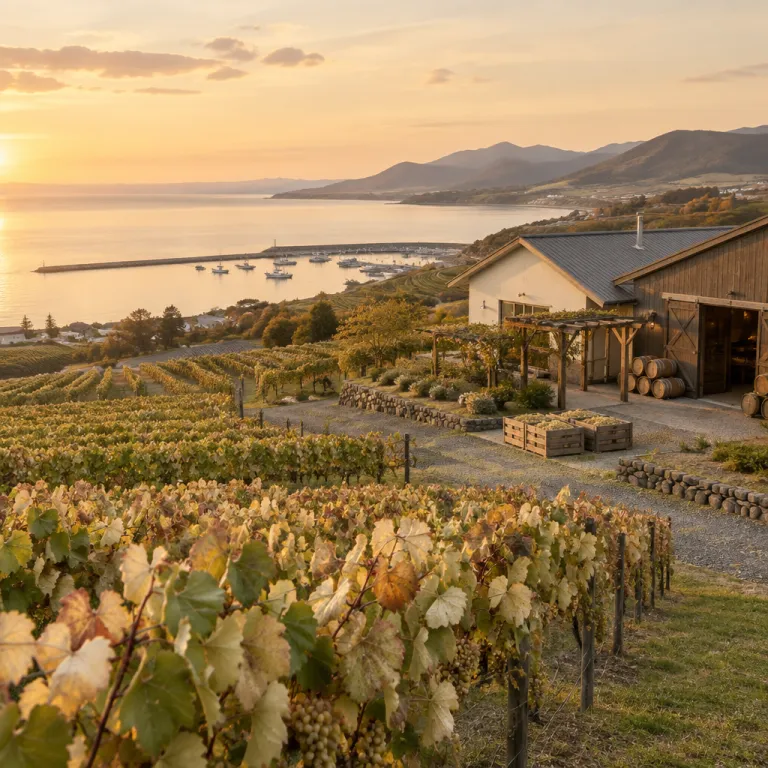
Yoichi’s coastal terroir and the rise of wine country
Yoichi sits between steep green hills and the cold Sea of Japan. This coastal setting in Yoichi Hokkaido creates a climate that is unusually gentle for the island, with long daylight hours, cool summers and snow that insulates vines in winter. For couples planning a romantic escape, that mix of maritime softness and mountain drama feels quietly cinematic.
Wine growers talk about volcanic soils before anything else, because Yoichi’s vineyards sit on well drained ash and sand that once framed the early whisky making story. The same terroir that helped the first malt Yoichi experiments now gives Pinot Noir, Chardonnay and Kerner a precise, saline edge that pairs beautifully with local seafood. When you taste yoichi wine Hokkaido Nikka side by side with a dram from the nearby distillery, the shared mineral line and sea breeze character become striking.
Weather here is shaped by Ishikari Bay and the surrounding ranges. Cold air from the sea meets warm currents from inland Hokkaido, creating misty mornings that slow ripening and protect acidity in both wines and the malt used at the yoichi distillery. That long growing season, measured in patient years rather than rushed harvests, is exactly what ambitious Japanese winemakers wanted but struggled to find elsewhere.
From coal fired stills to cellar doors: how Nikka shaped Yoichi
Long before anyone spoke about yoichi wine Hokkaido Nikka in the same breath, one man chose this town for whisky. Masataka Taketsuru searched for a place in Japan that felt like Scotland, and Yoichi Hokkaido, with its damp air, sea breeze and cool summers, matched his memory of Speyside and Islay. When you enter the red brick gates of the yoichi distillery today, that Scottish echo still feels bold and strangely familiar.
The distillery Nikka complex remains a working museum of traditional direct distillation. Copper pot stills are heated by direct coal fires, a method almost extinct even in Scotland, and that direct coal heat gives the malt a bold strong structure that stands up to the local climate. Watching this traditional direct flame licking the stills, you understand how seriously Japanese craftsmen take both whisky making and the idea of place.
That same respect for site now guides the new generation of winemakers. Many trained in Europe, then returned to work alongside the distillery Nikka teams, sharing labs, weather data and a philosophy of patient making that stretches across years. For travelers basing themselves in Sapporo, a refined city stay such as the Sapporo Hotel by Granbell pairs perfectly with a day trip that moves from coal fired stills to cool, barrel lined wine cellars.
Planning a wine led stay in Yoichi for couples
A yoichi wine Hokkaido Nikka itinerary works best when you slow down. Many visitors rush in for a quick distillery tour, but couples who stay overnight experience the town’s softer side, from quiet vineyard sunsets to late night tastings of single malt and local Pinot. The rhythm here suits travelers who prefer a glass in hand to a checklist in their phone.
Start your day at the yoichi distillery before the crowds enter, when the air still smells of malt and sea breeze. After walking past the direct coal fired stills and learning how Masataka Taketsuru built a Japanese interpretation of Scotland, head to a nearby winery for a contrasting lesson in cool climate viticulture. Tasting rooms often pour both current releases and older vintages, letting you feel how the wines gain depth over years in bottle.
Afternoons are for slow drives along Ishikari Bay, where the sea meets orchards and small vineyards. Many properties now offer refined farm stays and renovated barns, echoing the agritourism spirit you find in the converted farmhouses of Tokachi, but with a maritime twist and a focus on wine and whisky. If you crave more nature between tastings, look to curated nature escapes in Hokkaido that combine coastal walks, onsen and premium stays.
Producers, pairings and where to stay in style
Yoichi’s winemakers are a compact, ambitious group, many of whom left careers in Sapporo or Tokyo to work this volcanic soil. They talk about yoichi wine Hokkaido Nikka as a single narrative, where malt, grapes and the sea form one landscape rather than separate industries. That shared story is what makes tasting here feel more intimate than in larger, more commercial regions.
Several estates sit within a short drive of the yoichi distillery, allowing easy pairing of cellar visits with lunch overlooking rows of vines that roll down toward Ishikari Bay. Expect crisp sparkling wines, structured Chardonnay and light bodied reds that echo the precision of malt Yoichi, all shaped by the same sea breeze that cools the warehouses of distillery Nikka. Local restaurants lean into this, building menus around seafood from the nearby sea, grilled vegetables and Hokkaido lamb that stand up to both whisky and wine.
For accommodation, look for small luxury properties that understand how couples travel. Rooms with deep baths, views toward the sea and thoughtful whisky making touches, such as curated in room drams from yoichi Hokkaido, elevate a simple overnight into a quietly indulgent stay. The best hosts can arrange private tastings, transfers between wineries and the distillery, and even guided walks that trace how coal, water and volcanic rock shaped both the town and its drinks.
Weaving Yoichi into a wider Hokkaido itinerary
Yoichi works beautifully as a hinge between urban Sapporo and romantic Otaru. Many couples start with a few nights in the city, then enter the coast road west, where the landscape shifts from towers to cliffs and the scent of the sea replaces exhaust. That short drive sets the stage for a slower, more tactile experience of Hokkaido.
From Sapporo, trains and private transfers reach Yoichi in under ninety minutes, making it easy to fold yoichi wine Hokkaido Nikka into a broader circuit that might also include Niseko, Shakotan Peninsula and the farm rich plains around the Ishikari River. Otaru, with its stone warehouses and canal, pairs naturally with Yoichi’s red brick yoichi distillery, giving you two very different expressions of maritime Hokkaido in a single sweep. If you have several years of Japan trips behind you, this route feels like a deeper cut than the classic Tokyo Kyoto arc.
For winter travelers, the contrast between powder snow and warm tasting rooms is part of the appeal. Spend the day skiing Niseko or Kiroro, then drive down to the coast for an evening of malt Yoichi and local Chardonnay, both shaped by the same strong winds off Ishikari Bay. In summer, long evenings invite slow walks along the shore, where the sea breeze carries faint hints of coal smoke from traditional direct fired stills and the quiet clink of glasses from winery terraces.
Why Yoichi feels different from other wine regions
Plenty of regions talk about terroir, but Yoichi lives it in stereo. You taste volcanic soil and sea air in the glass, then smell coal and malt in the warehouses of yoichi Hokkaido, all within a few kilometres. That proximity between vineyard and still house makes the town’s identity unusually strong.
Unlike many wine regions that grew from aristocratic estates, Yoichi’s story is industrial, maritime and stubbornly hands on. The same direct coal heat that defines traditional direct distillation at the yoichi distillery mirrors the manual work in the vineyards, where pruning, picking and careful sorting still rely on human judgment rather than machines. Over years, that shared ethic has created a culture where both whisky and wine feel crafted rather than manufactured.
For travelers, this means your glass always comes with a sense of place. A pour of single malt from distillery Nikka, rich and bold strong from its coal fired stills, sits comfortably beside a lean, saline white from a nearby slope that faces Ishikari Bay and the open sea. When you leave, you carry not just bottles, but a mental map of how Masataka Taketsuru, Scotland, Japanese craftsmanship and the coastal climate all converged to make Yoichi one of the most compelling corners of Hokkaido.
FAQ
Is Yoichi worth visiting if I am not a whisky drinker ?
Yes, Yoichi is increasingly attractive even if you never taste whisky. The emerging wine scene, coastal scenery, seafood and relaxed small town atmosphere make it a rewarding stop for couples who enjoy food, nature and quiet luxury stays.
How many days should I spend in Yoichi for wine and whisky ?
Plan at least one overnight stay to balance distillery visits, winery tastings and time by the sea. Two nights allow a slower pace, with space for a side trip to Otaru or a half day hike before returning to your hotel for an evening tasting.
Can I visit Yoichi as a day trip from Sapporo ?
Yoichi works as a day trip from Sapporo by train or private car, especially if you focus on the yoichi distillery and one nearby winery. However, staying overnight gives you quieter tasting rooms, more flexible reservations and the chance to enjoy local restaurants without rushing back.
What is the best season to visit Yoichi’s wine country ?
Late spring to early autumn offers the most vineyard activity, with green vines, comfortable temperatures and clearer sea views. Winter is atmospheric for those combining ski trips with tastings, but some wineries may have shorter opening hours or require advance reservations.
How easy is it to combine Yoichi with Niseko or Otaru ?
Yoichi sits conveniently between Sapporo, Otaru and the Niseko area, making it simple to add to a coastal or ski focused itinerary. Private transfers and rental cars offer the most flexibility, while trains and local buses connect the main hubs for travelers who prefer not to drive.